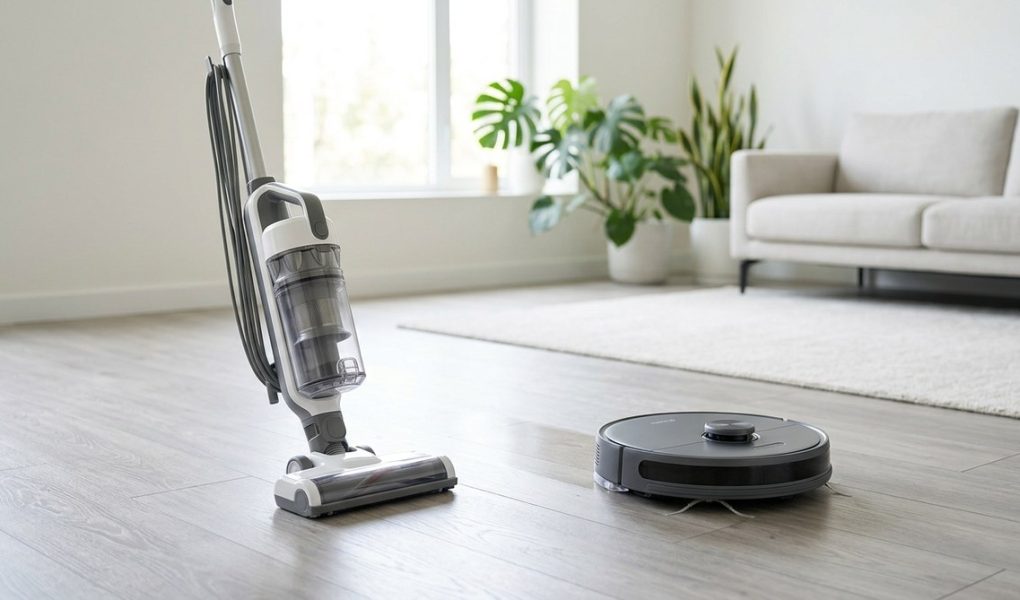
Engaging opening paragraph:
Cleaning your floors should feel effortless, not exhausting. If you are torn between a robot vacuum and a traditional vacuum, you are in good company. Both options have their strengths, and the right choice often comes down to your home layout, lifestyle, and budget. In this buying guide we break down how robot vacuums stack up against traditional vacuums, and we share practical tips to help you decide which one fits your cleaning routine best. At ProductReviewsBy.me we focus on unbiased insights so you can make a confident purchase.
What is a Robot Vacuum?
A robot vacuum is a small autonomous cleaning device designed to keep your floors tidy with minimal human involvement. It uses sensors, mapping technology, and sometimes cameras to navigate around rooms, avoid stairs, and return to a charging dock when its battery runs low. Many models offer app control, voice assistant compatibility, and smart features like scheduled cleaning, targeted room cleaning, and virtual boundaries.
Key points to know about robot vacuums:
– They clean floors from multiple angles with rotating brushes and suction a variety of debris.
– Mapping and sensors help optimize routes and prevent falls.
– They excel at routine maintenance and quick cleanups, especially on daily pet hair or dust.
What is a Regular Vacuum?
A traditional vacuum is the classic cleaning tool that relies on a powered motor to create suction. It comes in several forms, including upright, canister, stick, and handheld models. Traditional vacuums typically provide stronger raw suction, easier deep cleaning, and the ability to handle a wide range of messes with different attachments.
What sets traditional vacuums apart:
– Usually higher maximum suction power for deep cleaning and heavy debris.
– A range of tools such as crevice tools, motorized brushes, and upholstery attachments.
– Less downtime between cleanups since you are doing the work manually but often with more control.
How They Compare in Real Life
Cleaning Power and Effectiveness
- Robot vacuums: Modern robots offer strong suction for their size, optimized for daily maintenance, pet hair on hard floors and low-pile carpets. They may struggle with large debris or thick carpeting unless you choose a higher end model with robust motors and brush setups.
- Traditional vacuums: Generally provide more raw suction power and capacity for deep cleaning. They are better at handling heavy dirt, grit, and high pile carpets when you need a thorough overhaul.
Tips:
– For homes with mixed floors and light to moderate pet hair, a mid range robot vacuum combined with occasional deep clean sessions can work well.
– For homes with thick carpet or heavy dust build up in corners, a traditional upright or canister vacuum may be more efficient for the deep clean you want.
Ease of Use and Convenience
- Robot vacuums: The biggest advantage is hands free cleaning. You can schedule daily cleanings, set no go zones, and monitor progress through an app.
- Traditional vacuums: They require your involvement every time you clean. They can deliver faster spot cleaning when you spot a spill.
Tips:
– If you hate lugging a heavy machine or you have a busy schedule, a robot vacuum can save you time.
– If you prefer control and want to clean immediately without planning, a traditional vacuum offers direct, on demand cleaning.
Coverage, Mapping and Navigation
- Robot vacuums: Use mapping tech to create floor plans, avoid obstacles, and clean efficiently. Advanced models can remember multiple floor plans for multi level homes.
- Traditional vacuums: Navigation is manual. You guide the vacuum to every area, which can be faster in a single room but slower for large or complex layouts.
Tips:
– Look for models with intelligent mapping, multi room functionality, and bumper sensors if you want efficient coverage.
– For open floor plans with many furniture pieces, a robot vacuum with good mapping and edge cleaning capabilities is helpful.
Maintenance and Durability
- Robot vacuums: Maintenance includes emptying the dustbin, cleaning brushes, checking filters, and occasionally replacing batteries or sensors. Filter costs and brush wear add to long term expenses.
- Traditional vacuums: Maintenance includes bag or canister replacement, belt changes, and regular filter changes. They often have more parts that may wear over time but are widely available and repair friendly.
Tips:
– A simple maintenance routine can extend the life of either option. Check filters every 1 to 3 months and replace as recommended by the manufacturer.
Noise Levels and Comfort
- Robot vacuums: Generally quieter than many traditional vacuums, especially on hard floors. Some high power robot models can produce noticeable noise on full suction.
- Traditional vacuums: Noise levels vary widely. Uprights with strong motors can be louder, while compact stick vacuums can be quieter.
Tips:
– If you share your space with kids or pets during cleaning times, consider a model with a quieter mode or lower suction setting.
Space, Footprint, and Storage
- Robot vacuums: Compact and stored on a charging dock. They are easy to tuck away in a closet.
- Traditional vacuums: Depending on the model, they can take more space. Upright vacuums are bulkier to store in small spaces.
Tips:
– If you have limited storage, a robot vacuum on a charging dock is a practical fit.
Allergen Control and Filtration
- Robot vacuums: Many have sealed systems and high quality filters to trap fine dust and allergens. HEPA level filtration is common on higher end models.
- Traditional vacuums: Some models feature HEPA filtration and sealed systems as well. Vacuuming with a bagged model can reduce dust exposure.
Tips:
– For allergy sufferers, prioritize sealed filtration and high quality filters. Bagged traditional vacuums can help minimize dust release.
Price and Value
- Robot vacuums: Entry level models can be affordable, but the best mapping, powerful suction, and multi floor capabilities come at a higher price.
- Traditional vacuums: Generally offer a broad spectrum of prices. You can find basic models at lower price points or invest in premium, high suction units.
Tips:
– Consider total cost of ownership including filters, bags, and potential maintenance.
Smart Features and App Control
- Robot vacuums: Most include Wi Fi connectivity, companion apps, scheduling, remote start, and sometimes voice assistant integration. Some models support virtual boundaries, dirt detect, and precision mapping.
- Traditional vacuums: Smart features exist but are not as common. You may find battery powered stick vacuums with basic app control in some brands, but the experience is typically more basic than robot vacuums.
Tips:
– If you want automation, look for app friendly models with robust mapping and easy boundary creation.
Who Should Choose Each
When a Robot Vacuum Is a Great Fit
- You have a busy schedule and want automated cleaning with minimal effort.
- Your home has multiple levels, open floor plans, and a mix of hard floors and carpet.
- Pet hair is present but you want regular maintenance rather than deep cleaning every weekend.
- You value smart features and the ability to control cleaning from your phone or voice assistant.
When a Traditional Vacuum Is a Better Fit
- You demand deep cleaning power for high pile carpets or tough debris.
- You prefer immediate spot cleaning without planning or app setup.
- You want a versatile tool for upholstery, stairs, cars, and hard to reach areas with a broad set of attachments.
- You want a lower ongoing maintenance cost or you already own bags and filters you prefer.
Quick Buying Guide: What to Look For
- Floor type and home size: If you have mostly hard floors with occasional carpet, a mid range robot vacuum is often a solid choice. For large homes with high pile carpet, a traditional vacuum may be warranted for deeper cleaning.
- Suction power and brush design: Look for models with strong suction and capable brushes for pet hair. Some robot vacuums come with tangle free brushes designed for hair.
- Mapping and navigation: Multi level mapping is important for homes with more than one floor. Edge cleaning, corner cleaning, and boundary markers are useful features.
- Battery life and recharge time: Longer battery life means more cleaning coverage between charges. Check if the robot can resume cleaning where it left off after charging.
- Filtration: HEPA level filtration is helpful for allergy sensitive households. Sealed systems reduce dust leakage.
- Noise level: If you clean early in the morning or late at night, quieter models may be preferable.
- Maintenance costs: Budget for replacement filters, brushes, and bags if applicable. Robot vacuums typically rely on periodic bin emptying and filter changes.
- Smart features: App control, scheduled cleaning, no go zones and voice assistant support add convenience.
- Warranty and support: A robust warranty gives peace of mind for both robot vacuums and traditional vacuums.
Real World Scenarios to Consider
- Small apartment with cats and dogs: A robot vacuum can manage daily maintenance and reduce pet hair buildup, with periodic deep cleans using a traditional vacuum for stubborn areas.
- Family with children and open living spaces: A hybrid approach works well. Use a robot vacuum for routine upkeep and a traditional vacuum for deep clean sessions around play areas and high traffic zones.
- Home with multiple levels and stairs: A robot vacuum can map and clean main living areas, but you will still need a traditional vacuum or a handheld option for stairs and to tackle hard to reach spots.
Our Top Buying Tips
1) Start with a test run: If possible, borrow or rent a model to test how it fits your space before committing.
2) Prioritize the areas you clean most: If you have area rugs or a lot of pet hair, ensure the model you choose can handle those conditions well.
3) Consider the maintenance schedule: How often will you need to replace filters and brushes? Will the cost of replacement parts fit your budget?
4) Think about future needs: If you plan to upgrade to multiple floors or a larger home soon, a robot vacuum with multi floor mapping might be worth the investment.
5) Read independent reviews: Look for hands on testing that compares real world performance rather than marketing claims alone.
Common Myths and Truths
-
Myth: A robot vacuum can completely replace a traditional vacuum.
Truth: For many homes a robot vacuum handles routine maintenance well, but a traditional vacuum is typically needed for deep cleaning and spot work. A hybrid approach often yields the best results. -
Myth: Robot vacuums are only for hard floors.
Truth: Many robot vacuums work well on low to medium pile carpets, but very high pile carpets may benefit from traditional vacuum cleaning as well. -
Myth: Robot vacuums will eat cords and small objects.
Truth: Modern robots have sensors to avoid cords, toys, and other hazards, but it is still wise to declutter floor space for the best results.
Frequently Asked Questions
-
Can a robot vacuum replace a normal vacuum entirely?
In most cases, it serves as a strong supplement for routine maintenance, but some households still prefer a traditional vacuum for deep cleaning and hard to reach areas. -
Is a robot vacuum worth it for pet hair?
Robot vacuums can be very effective at daily maintenance; for thick fur or heavy shedding seasons you may still use a traditional vacuum to deep clean upholstery and carpets. -
Do robot vacuums work on stairs?
Most robots avoid stairs using sensors and vision; a dedicated stair safe tool or manual cleaning is still needed for stairs. -
How long do robot vacuums last?
Typical lifespans range from 3 to 6 years depending on usage, maintenance and build quality. Regular maintenance extends life.
Final Thoughts: Picking the Right Tool for Your Home
Choosing between a robot vacuum and a traditional vacuum is not about declaring one best option for every home. It is about evaluating your space, your cleaning habits, and your budget. For many households, the ideal setup is a robot vacuum that handles daily touch ups and light cleaning, paired with a traditional vacuum for deep cleans a few times a month. This combination gives you the best of both worlds: consistent upkeep with the power to tackle tougher messes when needed.
At ProductReviewsBy.me, we aim to keep your buying decision straightforward. Our unbiased buying guides compare features, costs, and real world performance to help you choose confidently. If you would like, we can tailor a quick recommendation based on your floor type, home size, and cleaning habits.